What Are Multicore Cables and Where Are They Used?
With the emergence of various kinds of electrical and electronic systems in the modern world, the necessity for wiring solutions that are efficient, safe, and well-arranged has skyrocketed. The kind of cable has also been the determining factor of the performance and the reliability of the systems in the scenarios above.
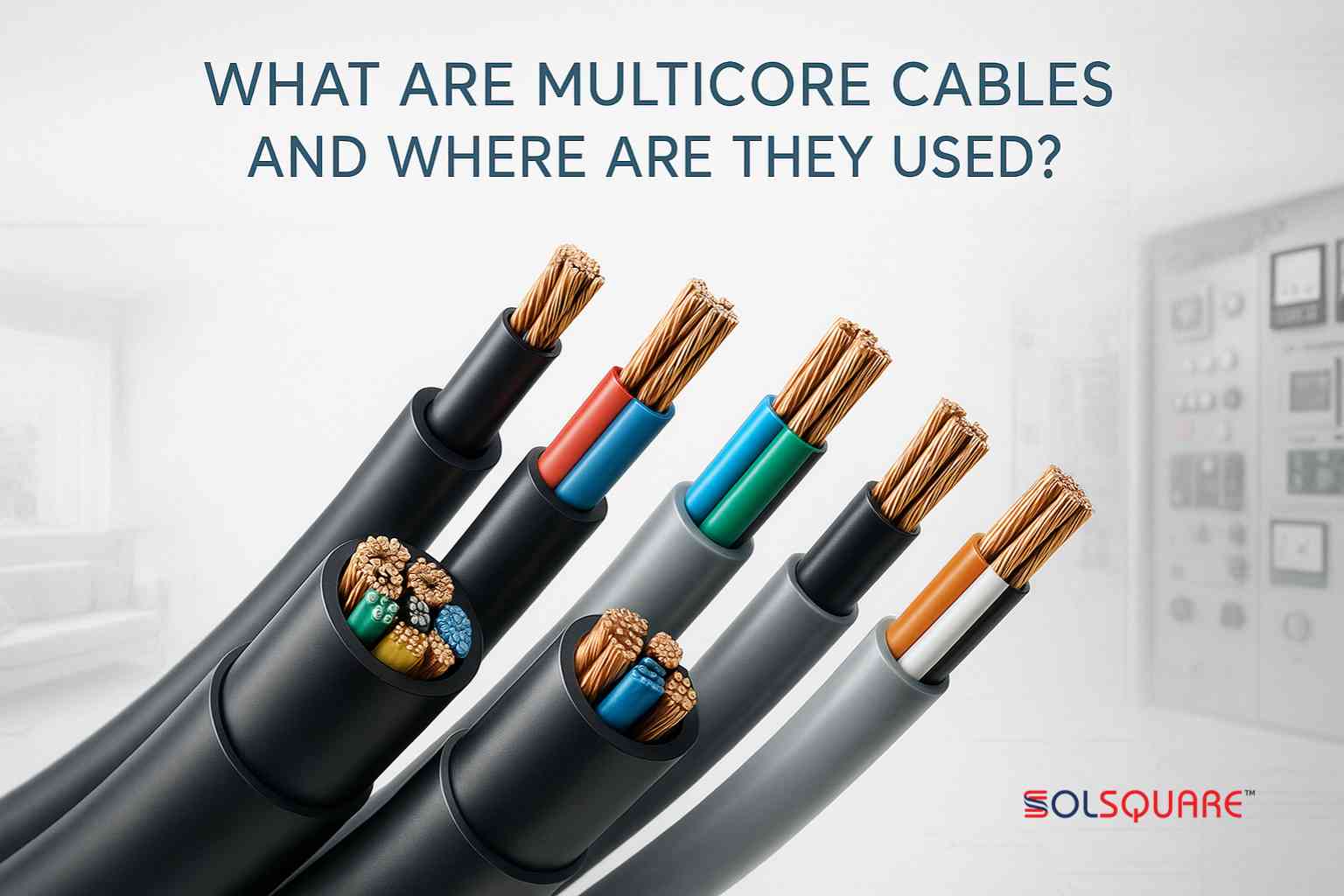
Multicore cables, without a doubt, are one of the most adaptable and widely possible application cabling types available on the market. The way they are made, the way they work, and the practically limitless ways in which they can be used make them the most preferred components of any company which is in contact with them. So, what are multicore cables, and where do they typically operate? This detailed manual reveals all the basics.
What Are Multicore Cables?
Multicore cable is an electric cable that has two or more separately insulated wires combined in a single protective cover of the cable. Any one of the wires, also called core, may be used for power, signals, or data independently, thus these cables are perfect for the uses where several connections in one compact cable are necessary.
Key Features of Multicore Cables
- Multiple insulated cores contained in one cable
- Compact and organized wiring solution
- Outer protective sheathing for safety, durability, and insulation
- Available in copper or aluminum conductors
- Can carry power, control signals, or communication signals
- Different configurations like 2-core, 3-core, 4-core, 5-core, and even 24-core or more
Why Use Multicore Cables?
Using multicore cables simplifies wiring by eliminating the need to run multiple individual cables. This reduces:
- Installation time
- Cable clutter
- Maintenance efforts
- Overall project costs
They also enhance safety by providing additional insulation and mechanical protection.
Types of Multicore Cables
1. Power Multicore Cables
Such cables are the ones that carry power from the main supply to machines, appliances, industrial systems, and control panels. In general, they have cores for live, neutral, and earth connections.
2. Control Multicore Cables
Control multicore cables are commonly found in automated systems, machinery control, and signaling. The manufacturer designed them to operate at low voltage and make them very flexible.
3. Instrumentation Multicore Cables
The main purpose of these cables is to enable data transmission from the sensors, instruments, and communication devices in the industry.
4. Audio/Video Multicore Cables
The main purpose of these cables is to facilitate a smooth interaction between various audio/video channels in one cable. They are used in the production and lighting of the stage, professional audio setups, and video making.
5. Telecommunications Multicore Cables
Telecommunication multicore cables are the ones that accommodate the carrying of LAN, telephone, and communication signals over long distances.
Construction of a Multicore Cable
- Conductors: Usually made of copper due to its high conductivity and flexibility. Aluminum is also used in special applications.
- Insulation: Each core is individually insulated using PVC, XLPE, or other polymers.
- Bedding / Filler: Used to maintain cable shape and support the cores.
- Shielding (Optional): In order to minimize electromagnetic interference (EMI), some cables have a metal shield that covers the entire cable.
- Outer Sheath: Can give the unit the necessary mechanical protection, resistance to the weather and also, depending on the material, fire resistance.

Where Are Multicore Cables Used?
1. Residential and Commercial Electrical Wiring
- Internal building wiring
- Electrical switchboards
- Lighting circuits
- Power distribution
2. Industrial Automation and Machinery
- Machine control signals
- PLC (Programmable Logic Controller) connections
- Motor control and feedback systems
- Assembly line automation
3. Communication and Networking
- Telephone lines
- Internet connections
- Data transfer in control rooms
- Networking hubs and routers
4. Broadcasting and Audio-Visual Equipment
- Microphone groups
- Speaker systems
- Stage lighting controls
- Video transmission lines
5. Automotive and Transportation Systems
- Dashboard controls
- Engine sensors
- Lighting systems
- Communication between electronic modules
6. Medical Equipment
- Patient monitoring systems
- Diagnostic machines
- Data communication between modules
7. Renewable Energy Systems
- Control connections
- Power transfer
- Monitoring sensors
Advantages of Multicore Cables
- Space-saving design
- Quick installation & maintenance
- Reduced clutter
- High durability & safety
- Better organization of circuits
- Lower overall cost in large projects
- Flexibility and ease of routing
Limitations of Multicore Cables
- More expensive compared to single-core cables
- Harder to repair if only one core is damaged
- Not ideal for very high-power transmission
- Bulkier in high-core-count versions
FAQs
Conclusion
Multicore cables are essential for the transmission of electrical power, the implementation of communication systems, the facilitation of automation processes, and a wide range of contemporary applications. Their feature to have multiple signals or power connections internally in a single cable makes them very efficient, safe, and economical. In any case, if they are utilized in living quarters, manufacturing, electronic gadgets, or energy sources that can be replenished, these are the means that facilitate the installation processes, diminish the disorder and elevate the efficiency of the system.
With the progression of technology and the subsequent interconnection of systems, the demand for dependable multicore cable solutions will be ever-increasing. The appropriate type of multicore cable is a prerequisite for safety, stability, and excellent performance in any application in the long run.